Minnesota · Cook County
Alder Lake Fishing guide
Alder Lake is a 529-acre lake in Cook County, Minnesota, reaching 72 ft at its deepest point. Secchi readings average around 14.2 ft of visibility. The Minnesota DNR has surveyed the lake 9 times, most recently in 2025, with walleye, smallmouth bass, northern pike and yellow perch in the nets.
DNR survey data
Fish species
WalleyeFair numbers1.3per gill net15"Typical23"Biggest
Lengths measured · 16 fish
Recent · 2015Lengths measured · 16 fish
2015Lengths measured · 6 fish
2010Only 6 fish measured that year — too few to read as a shape.
Lengths measured · 16 fish
2005Lengths measured · 5 fish
1999Only 5 fish measured that year — too few to read as a shape.
No recent survey rating.
Last recorded in the 2015 survey and not seen since.
Last recorded in the 2005 survey and not seen since.
Rates come from standard DNR survey gear (gill nets, trap nets, electrofishing), judged against statewide benchmarks for the same gear, so the same number of fish per net can read differently for two species. Where the standard gear can't count a species reliably, only presence and size are listed. Typical is the middle fish of those measured. Open a row for the full length spread, survey by survey.
How to fish Alder Lake through the year
Walleye
- Spring
- Walleye are shallow, on and just off the spawning flats and the first green weeds. At 14.2 ft of clarity, fish them deeper and lighter than usual.
- Early summer
- Walleye are setting up on the outside weed edge, points and shallow structure.
- Summer
- Walleye are working the weed edge, points and any wind-blown structure. On a lake that drops to 72 ft, check the deep edge of that structure too.
- Fall
- Walleye are packing onto the sharpest breaks and points as the water cools, in big schools with short windows.
Smallmouth bass
- Spring
- Smallmouth are on shallow rock, gravel and sand where they spawn. At 14.2 ft of clarity, fish them deeper and lighter than usual.
- Early summer
- Smallmouth are post-spawn on rock points, gravel bars and the adjacent breaks.
- Summer
- Smallmouth are on rock humps, points and hard-bottom breaks. On a lake that drops to 72 ft, check the deep edge of that structure too.
- Fall
- Smallmouth are bunched tight on deep rock, so find one and you have found the school.
Season patterns for each species. Open the live map for today's wind, light and water temp.
Size history
Biggest fish by survey year
| Survey year | Walleye | Smallmouth bass | Northern pike |
|---|---|---|---|
| 2015 | 23" | 15" | 30" |
| 2010 | 20" | 14" | 29" |
| 2005 | 19" | 14" | 27" |
| 1999 | 21" | 6" | 25" |
Longest fish measured by DNR survey crews in each year's nets. Survey gear samples the population, so the lake usually holds larger fish than any survey measured.
Suggested tackle
What to bring
Top presentations for this lake's structure and clarity:
Walleye · Live bait
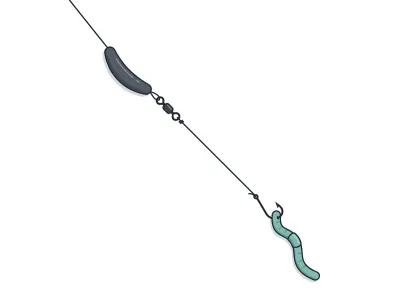
Live-Bait (Lindy) Rig + Leech/Crawler
jumbo leech or half a nightcrawler
Walleye · Trolling
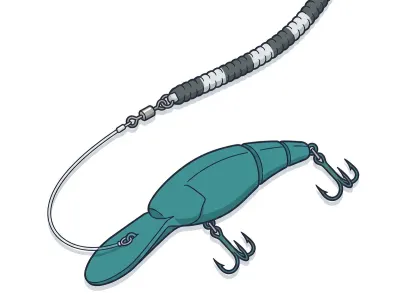
Leadcore Line + Crankbaits
4–5" mid-diving crankbait behind a long leadcore run
Smallmouth bass · Soft plastics
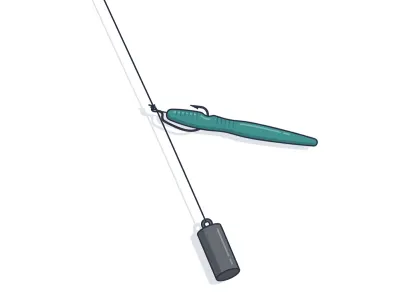
Drop Shot (Finesse Plastic)
4" finesse worm or 3" minnow-profile plastic
Smallmouth bass · Jigs & bladed
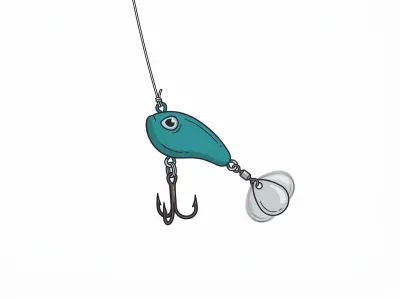
Tail Spinner
Compact lead body with a free-spinning blade on the tail
Northern pike · Soft plastics
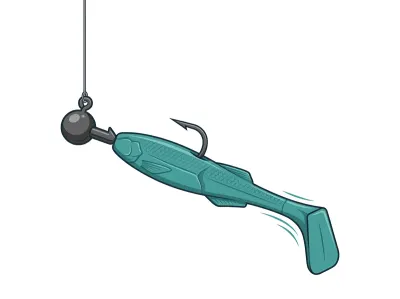
Paddletail Swimbait on Jighead
4–5" paddletail swimbait on a ball-head swimbait jighead
Northern pike · Muskie & pike
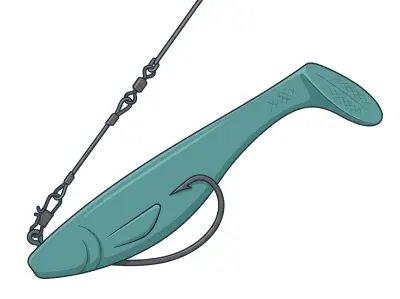
Soft Rubber (Bull Dawg / Medusa)
10" soft rubber body bait
Full setups, including hooks, weights and line, are on the live map. As an Amazon Associate I earn from qualifying purchases.
MN DNR · in their words
From the 2025 survey
Temperature and dissolved oxygen (DO) measurements were collected from the deepest basin in Alder Lake on August 13th, 2025, to evaluate the quantity and quality of cold, oxygenated water (i.e., oxythermal habitat) available to Lake Trout, the most sensitive coldwater species present in this lake. During the summer, Lake Trout require a layer of oxythermal habitat that contains water temperatures below 8.8 degrees C (47.8 degrees F) and dissolved oxygen concentrations above 3.0 mg/L. Based on the profile from the deepest basin (maximum sampled depth 52.5 feet), the water temperature decreased below 8.8 degrees C (47.8 degrees F) at 29.2 feet and the dissolved oxygen concentration decreased to 3.0 mg/L at 50.9 feet at the time of sampling. The thickness of this layer of water in the water column was 21.7 feet, indicating that oxythermal habitat was present for Lake Trout.
Further, the temperature at which dissolved oxygen decreased to 3.0 mg/L (i.e., TDO3, a single variable to characterize oxythermal habitat) was 7.3 degrees C (45.1 degrees F). TDO3 values cooler than 8.8 degrees C (47.8 degrees F) indicate that oxythermal conditions were suitable for Lake Trout at the time of the survey.
Read the full DNR narrative
Data collected by the Minnesota Department of Natural Resources during the late summer period of maximum oxythermal stress (July 26th to Aug 24th) in 4 years, between 1988-2024, indicate suitable oxythermal habitat in most years when surveyed, with the least favorable conditions recorded in 2024 when adequate oxythermal habitat was unavailable. Reviewing recent data, Alder lake has TDO3 measurements ranging from 6.8 to 9.8 degrees C. When adequate oxythermal habitat is unavailable, Lake Trout are squeezed into unfavorable, warmer water conditions and experience higher levels of stress.
Narrative text from the Minnesota DNR lake survey.
Recent reports
Alder Lake fishing reports
Recent reports on Alder Lake from guides, tournaments and regular anglers. Anything posted in the last two weeks also bumps the matching spots on the live map, so you'll see a "matches a recent report" tag on them.
Public water access
Getting on the water
- US Forest Service access (permit required)
DNR bathymetry
Alder Lake depth map
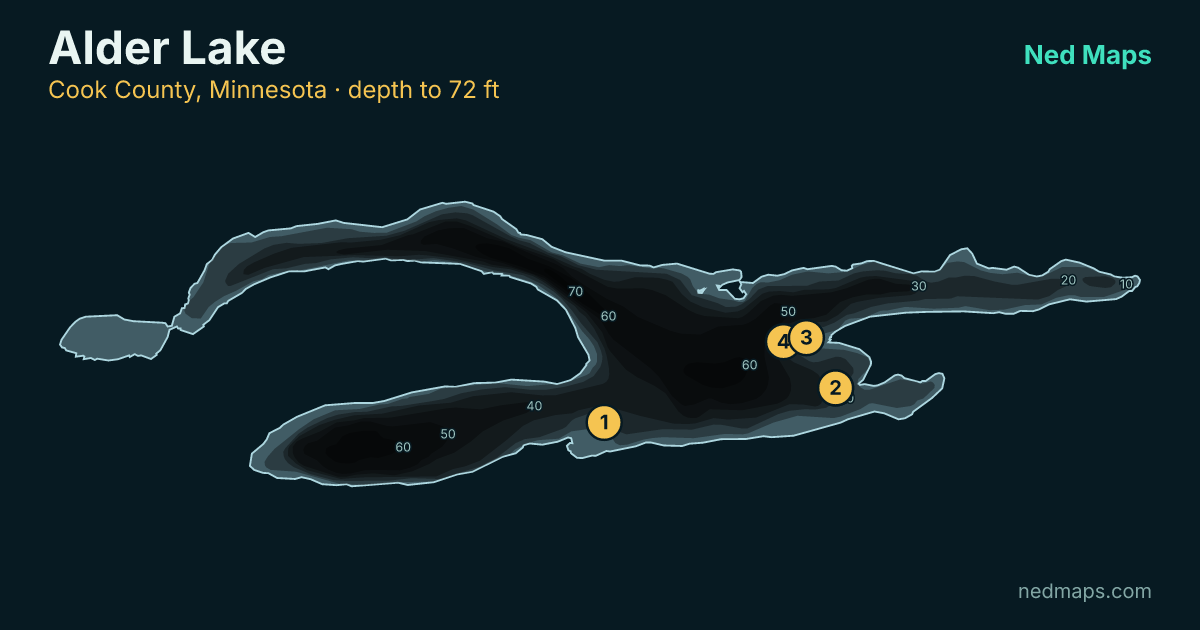
Within 30 miles
Nearby lakes
- Caribou Lake · 462 ac · 1.7 mi
- Kraut Lake · 21 ac · 1.7 mi
- Crocodile Lake · 295 ac · 1.9 mi
- Pierz Lake · 89 ac · 2 mi
- Moon Lake · 148 ac · 2 mi
- Crystal Lake · 206 ac · 2.6 mi
- Turnip Lake · 21 ac · 2.8 mi
- Clearwater Lake · 1,344 ac · 2.8 mi
Quick answers
Frequently asked questions
How deep is Alder Lake?
Alder Lake reaches 72 ft at its deepest point; about 25% of the lake is littoral (15 ft or shallower).
How big is Alder Lake?
Alder Lake covers 529 acres with about 10 miles of shoreline.
How clear is the water in Alder Lake?
DNR Secchi readings on Alder Lake average 14.2 ft of visibility, clear water for a Minnesota lake.
What fish are in Alder Lake?
Minnesota DNR surveys (most recently 2025) record walleye, smallmouth bass, northern pike, yellow perch, lake trout, splake.
Is Alder Lake stocked?
No stocking is on record for Alder Lake in the DNR's stocking database.
Does Alder Lake have a public access?
Yes. Alder Lake has one public access site: US Forest Service access.
How big do walleye get in Alder Lake?
The biggest walleye measured in recent DNR surveys taped 23"; the size-history table on this page tracks the biggest fish in each survey back to 1999.
When was Alder Lake last surveyed?
The Minnesota DNR last surveyed Alder Lake in 2025, the most recent of 9 surveys on record.
Page updated .

Featured guide spot
Your guide service here
One featured guide per lake, with your photo, your writeup and a link straight to your booking page. Free through December 31, 2026.
Then $20 a month from January. Cancel any time.
The live map adds today's conditions and ranked spots for Alder Lake, plus a trip plan you can share:
Open Alder Lake on the live map → Fished it lately? Write a report